You are on the Fidelity website for Institutional Investors.
Provided by FIAM LLC, a registered investment adviser.
Families with private foundations have a tremendous opportunity not only to support causes they care about, but also to work together to strengthen family bonds and achieve a shared purpose. However, functional family philanthropy doesn’t happen by chance—it’s a result of thoughtful partnership, respectful interactions, and intentional governance.
Family governance is a system of principles, processes, and objectives that guides how a family works together.
To engage successfully in family philanthropy, clarity around objectives is critical. Families should think about the following questions:
It’s very helpful for families to draft a mission statement that articulates the foundation's values, goals, and philanthropic priorities. A clear mission statement serves as a north star for decision-making and can help the foundation stay true to its objectives.
Family governance essentials:
Today’s families come in all forms, and family members have various lifestyles and interests. Some may be eager to participate in the family’s philanthropy while others are more hesitant. It’s helpful to determine who will participate and what will be expected of them.
Consider:
It’s also important to realize that life stage may affect interest in the family’s philanthropy. Some family members may have demanding jobs or educational obligations; others may have small children or elders to care for or challenging travel schedules. These competing priorities may change over time. Being cognizant of conflicting demands and offering multiple ways for family members to engage is often critical for encouraging involvement.
A 2025 survey by the National Center for Family Philanthropy found that 47% of family foundations now have assets exceeding $10 million,1 a significant increase over the past decade. Larger foundations often involve multiple generations and more diverse viewpoints. While these different perspectives can strengthen philanthropy, they can also create tension.
Differences of opinion on philanthropic priorities, risk tolerance, and desired outcomes are common. In some families, power dynamics also might play a role. Older generations may wield greater authority, or the wealth generator might be perceived as always having final say. Families should anticipate conflicts and proactively have practices in place to resolve them.
Potential approaches include simple majority voting, supermajority voting on big decisions, and consensus-based decision-making. It also might involve creating different funding pools for different participants, generations, or issues.
Anticipating differences and establishing objective processes to resolve them can help set the family up for success.
Thinking through how the foundation will make grants is important for objectivity and operational efficiency. Some questions to consider:
Developing an objective scoring system for evaluating funding requests can be helpful for many families. This can keep the focus on initiatives that align with the foundation’s mission, creating consistency and ensuring fairness in decision-making.
Families should plan for regular meetings, setting a manageable cadence and convening with purpose. Having a clear agenda for each meeting is helpful, and allowing both in-person and virtual participation can maximize engagement.
It’s also helpful to create and provide each participating family member with a comprehensive set of foundation policies and procedures. This sets expectations and avoids confusion.
Effective foundation governance allows families not only to give generously today, but also to cultivate a philanthropic legacy that endures for generations.
That said, even with clear intentions and procedures, operating a foundation may be overwhelming for families. Collaborating with an experienced consultant to develop or refine policies and processes can help ease the burden and ensure efficiency. Fidelity’s Outsourced Chief Investment Officer (OCIO) and Philanthropic Consulting teams can help.
1. Trends 2025—Results of the Third National Benchmark Survey of Family Foundations, National Center for Family Philanthropy, 2025. https://www.ncfp.org/resources-tools/trends-2025-results-third-national-benchmark-survey-family-foundations
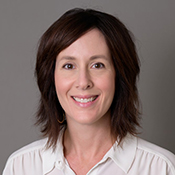
Jennifer Bahus is vice president of philanthropic consulting at Fidelity Investments®, where she provides philanthropic counsel and strategic planning support for a wide range of donors looking to create more meaningful impact. She manages a diverse portfolio of clients, from Fortune 500 companies and major private foundations to individual donors and nonprofit organizations. She has deep experience in structuring and managing granting initiatives and enjoys serving as a thought partner with clients, using sector best practices and data-driven insights to develop innovative and effective philanthropic solutions. Prior to joining Fidelity Philanthropic Consulting, Jen led marketing and program initiatives supporting ultra-high-net-worth donors at Fidelity Charitable.
See how our tailored solutions help endowments and foundations navigate the evolving market and work toward their investment objectives in service to their mission.
Learn more
Explore outsourced CIO solutions tailored to your needs, powered by Fidelity's deep investment capabilities and proprietary research.
Learn more
Discover how our investment solutions can be tailored to meet your unique goals and objectives.
Learn more
Views expressed are as of the date indicated, based on the information available at that time, and may change based on market and other conditions. Unless otherwise noted, the opinions provided are those of the authors and not necessarily those of Fidelity Investments or its affiliates. Fidelity does not assume any duty to update any of the information.
Fidelity Philanthropic Consulting is a division of National Charitable Services. a Fidelity Investments company. The Fidelity Investments name and logo are registered service marks of FMR, LLC.
Fidelity Charitable is the brand name for the Fidelity Investments' Charitable Gift Fund, an independent public charity with a donor-advised fund program. Various Fidelity companies provide services to Fidelity Charitable. The Fidelity Charitable name and logo, and Fidelity are registered service marks of FMR LLC, used by Fidelity Charitable under license.