You are on the Fidelity website for Institutional Investors.
Provided by FIAM LLC, a registered investment adviser.
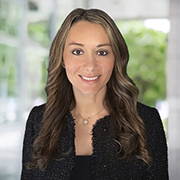
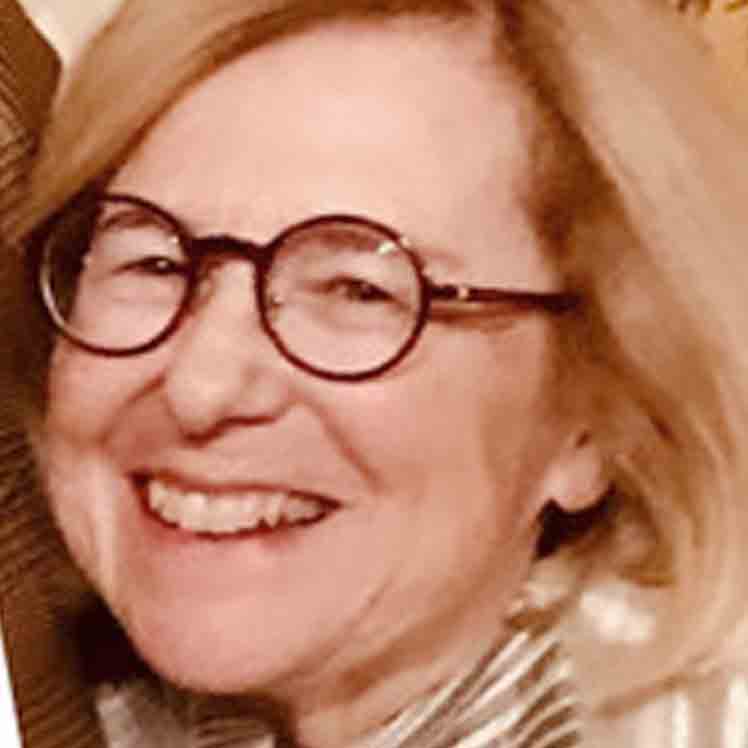
In a candid conversation, Cyndy Taylor, President of Housing Initiatives of New England Corp. (HINEC), reflects on her personal journey, navigating complex funding structures and her approach to developing community-centered affordable senior housing. Speaking with Fidelity’s Danielle Frissell, senior vice president of endowments & foundations business development, Taylor shares insights on the nonprofit landscape.
Danielle Frissell: Can you share a little about your journey? What led you to nonprofit work and affordable senior housing, specifically?
Cyndy Taylor: I started out training as an architect. When I got out of architecture school, there were very few jobs. I worked in Providence (Rhode Island) for a while, and then moved back to Maine, where my family was and I worked in Portland helping to gentrify the “Old Port.”
In the late ’70s, there were long gas lines, and a lot of economic challenges. It was a tough time. I ended up getting a job offer as a resident architect with Maine’s housing authority. It turned out to be a fortunate move. It gave me the chance to meet almost everyone in the industry—I got to know architects, contractors, and attorneys. Most importantly, I learned how to finance housing.
Then I had a major turning point in my life. My brother was killed in a car accident, and it really shook me. I resigned from my job. I had imagined growing old alongside this person, and suddenly everything felt different.
Within a week of leaving, I had three job offers: one with a contractor, one with an architectural partnership, and one with a developer. I looked at the backgrounds of each of the people running those companies, and the developer had the strongest academic background. I remember thinking that’s where I can learn the most. So, I chose the path of developing housing. I ended up working for him for almost 14 years. Then, as often happens, the economy shifted again. He decided to shift gears and step away from development. At the time, there were three of us serving as vice presidents. He was generous to us as he exited the development business and wished us “good luck.”
I really liked what I did, but I realized that I wanted to do it as a nonprofit. I had built a strong network in the housing world in Maine. So, I pulled together a group of people I trusted: someone from Maine’s elderly services because I wanted to focus on senior housing, an accountant, an attorney, and a colleague I had worked with before in management and development. Together, we formed a board of directors.
That is how I started. I bid on two projects—the first one in New Hampshire and the second in Maine. I won them, which gave me a base. A very nice group in New York, National Development Council (NDC), an equity group doing community development, helped provide equity for some of our earliest projects in New England. Ever since then, I have typically had one project in development and another in construction at any given time. The development and asset management kept our balance sheet in the black.
Danielle Frissell: What drew you to the mission of starting Housing Initiatives of New England?
Cyndy Taylor: If I take a step back, when I decided to start the nonprofit, Housing Initiatives of New England Corporation, it was driven by two things I care deeply about. I love architecture and buildings. The other focus that I love is older people. I like to say I married those two passions. It goes back to my work at MaineHousing.1 I saw the need to build new housing. I learned how to make it happen—everything from financing to building relationships with people in the housing industry. There were a lot of other experiences along the way, but that was the core of my journey.
The prospects for further development in affordable senior housing are good. There is a steady trajectory in affordable housing needs amidst the different market cycles. The need is always there. If anything, when the economy slows, more people turn to housing for economic stimulus. Additionally, the sector tends to get more support through legislation and similar efforts. During economic downturns, I have often had more work than I could take on. Right now, we have about eight projects underway. This year has been exceptional; we have just closed on financing for six projects, all of which are now under construction, and we have two more right behind them. In total, we have 29 communities, with about 1,200 units and roughly 1,800 residents. We have two assisted living complexes. By the end of next year, we expect to have 32. In addition, we have several commercial properties that help our communities.
Looking back, it is the people we have met, and the relationships built, especially within New England communities and in the banking world, that have strengthened our organization.
Danielle Frissell: What are some hurdles or policy shifts that raise concerns for the future of housing access?
Cyndy Taylor: Zoning is one piece of it. The legal side of zoning and the abutters perceived problems is another piece. But that is something I can usually work through because there are benefits to zoning. We do a lot of work in northern New England and smaller communities, and there is a real advantage to zoning there and maintaining relationships.
Where things have really changed is on the legal side. We are seeing more roadblocks. On the financing side, you need a team and a responsible captain. But sometimes it is not that simple. In affordable housing, the capital stack is typically made up of debt, equity, and any additional sources you can bring in to make the deal work. On one project, for example, we had a bank, a finance agency, an equity provider, and then us. We also had multiple attorneys: a tax attorney, a land use attorney, and a closing attorney—-sometimes overlapping roles for each party involved. And each of those parties had their own legal teams; all adding to the costs of affordable housing.
It can be a constant stream of requests and is time-consuming. More money and more time added to the much-needed affordable housing. The landscape is becoming even more multi-layered: You must protect against contractor risk, zoning issues, potential losses, whether that is insurance, builder’s risk, or other challenges. We are also dealing with higher inflation. The cost of building today is just exorbitant. When you cannot find products and must revise plans, it adds more architectural fees. That ripples up the entire chain of costs. Not only are materials inflated today but also labor costs are inflated. This challenge is hard to overcome.
Additionally, I have noticed a wave of retirement among some of the agencies’ leadership and professionals we have worked with. We are seeing a shift in capacity, which means we need to train a new generation of development officers across the board to understand affordable housing best practices and finance.
Danielle Frissell: Nonprofits often must stretch every dollar. How does HINEC approach financial stewardship to ensure long-term stability and impact?
Cyndy Taylor: We have been creative—recapitalizing where we can and minimizing reliance on public funding—so we can build what our communities need. Those needs are energy improvements and capital replacements. We have built up equity over 30 years, that has really been a godsend for us. Another advantage is having land to grow our footprint—it is a rural advantage. We have been able to recapitalize existing projects, take out the equity, and reinvest it into new units on the same sites. In Pelham (New Hampshire), for example, we have completed two developments. We are on a third development using that strategy to add another 28 units. It is a strong, sustainable model; good for our partners, banks, contractors, attorneys, housing agencies and most of all, seniors and it does not require tapping into limited public funding. We can keep this strategy going with our portfolio and stay in a healthy position. It is a real win, and one you just do not see in urban markets where sites have been maximized with the highest densities allowed.
We have been creative in other ways, as well as in our financing methods. We are very disciplined with our development fees. Over the past few years, we have been able to put a little away in a bank, and that’s added up. It has given us flexibility to reinvest on our own terms. I have never tried to build the biggest housing complex. The focus is on projects that fit the community and are well received. They feel like home.
And on the staffing side, we have kept things lean. It is a small team; there are strong public and private partnerships, and no bureaucracy in house. We are nimble and we can move with precise experience. That has given us a lot of freedom without feeling constrained as a nonprofit organization. When you think about putting together a fabulous team, I am truly fortunate.
Danielle Frissell: Are there financial strategies or practices that have been especially important for weathering economic cycles and funding?
Cyndy Taylor: There are several ways we do this. There was a big push for historical buildings about a decade ago. And there are tax credit programs for these sites. It was about 20% on the federal level and another 10% on the state level in Maine. So, that would cover about 30% of a historical building project cost. I saw an opportunity there and a creative use of financing. We have developed several historic buildings, including schools, mills, and a city hall.
I have also made a habit of picking up small properties near existing complexes to take advantage of the economy of scale in management. Our hedge against inflation right now is to buy property near our sites. They are for future development. At the end of the day, it is about really knowing the ins and outs of the federal government, the local rules, honing in on details like spreadsheets that people can understand, quality living for seniors and surrounding yourself with the right team.
Occupancy and curb appeal are important. Building high quality and very efficient systems for long-term holding has provided strong returns for the residents’ quality of life and enjoyment. We want the seniors to be happy and proud to live in quality homes.
Danielle Frissell: What value can an external investment manager [outsourced chief investment officer (OCIO)] bring to managing your organization’s portfolio and long-term capital? Additionally, how important is it for you to partner with an investment manager who understands your mission and can deliver returns?
Cyndy Taylor: It is absolutely important. It is so strategic. We interviewed seven wealth management companies before settling on two. Fidelity was our first choice. How we move forward with our investments is critical. The ability to provide great research, understand the markets, and our future needs are all key to our success in providing shelter and services.
It is certainly about growing money to meet our “housing with services” goals. When we did the interviews, we reviewed companies based on how they looked at the world, how they approached investments, and how they explained their perspectives. Our goal was to make sure we captured a wide range of thinking. I was looking for perspectives at both ends of the spectrum—a wealth manager with global offices, and another that was more local. We found both.
Fidelity had the greatest understanding of the mission orientation of our non-profit. They wanted to know us and our business. We believe they will be an integral part of moving Housing Initiatives forward to help more seniors in New England.
We have some lofty goals to meet the growing needs of seniors and with the help of the Fidelity Team, we believe they can help us structure our growth and bring resources, education, and empathy, to us for our community successes.
Housing Initiatives of New England Corporation is a current client of FIAM LLC, a Fidelity Investments company, for OCIO services and may not be representative of the experiences of other FIAM LLC clients. Housing Initiatives of New England Corporation was not provided cash or non-cash compensation by FIAM LLC for its testimonial, nor are there material conflicts of interest that would affect the given testimonial.
See how our tailored solutions help endowments and foundations navigate the evolving market and work toward their investment objectives in service to their mission.
Learn more
Explore outsourced CIO solutions tailored to your needs, powered by Fidelity's deep investment capabilities and proprietary research.
Learn more
Discover how our investment solutions can be tailored to meet your unique goals and objectives.
Learn more
1. MaineHousing is an independent, quasi-state agency created in 1969 by the Maine state legislature to address the problems of unsafe, unsuitable, overcrowded, and unaffordable housing. https://www.mainehousing.org/about.